

- Build in the crate
- 14.1.0
- Made by the team at
- Wolfram
- Menu languages offered
- English, Japanese
- How you pay for it
- Included
- macOS it plays on
- macOS 11 or later
- CPU it runs on
- Intel 64-bit
Screenshots
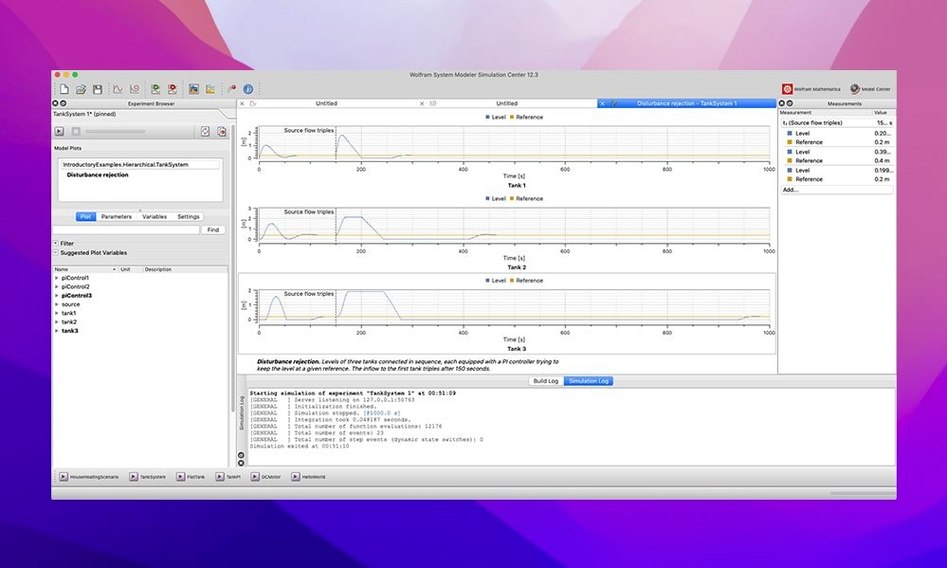
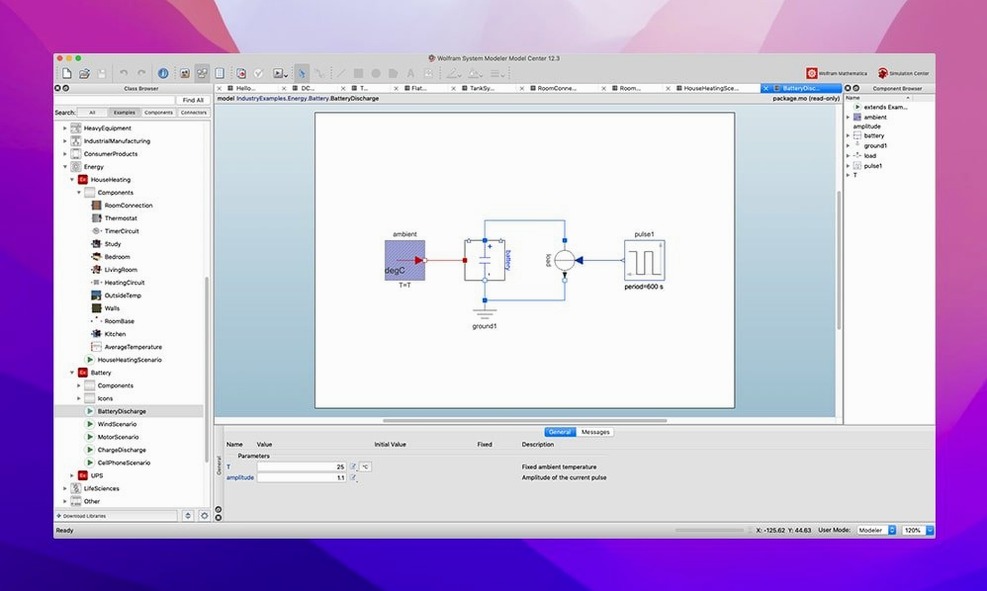
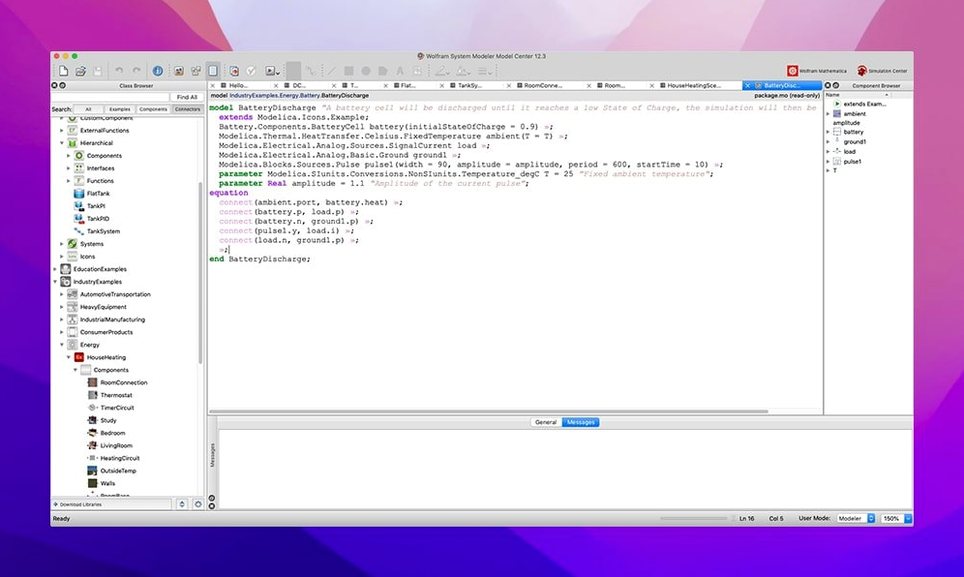
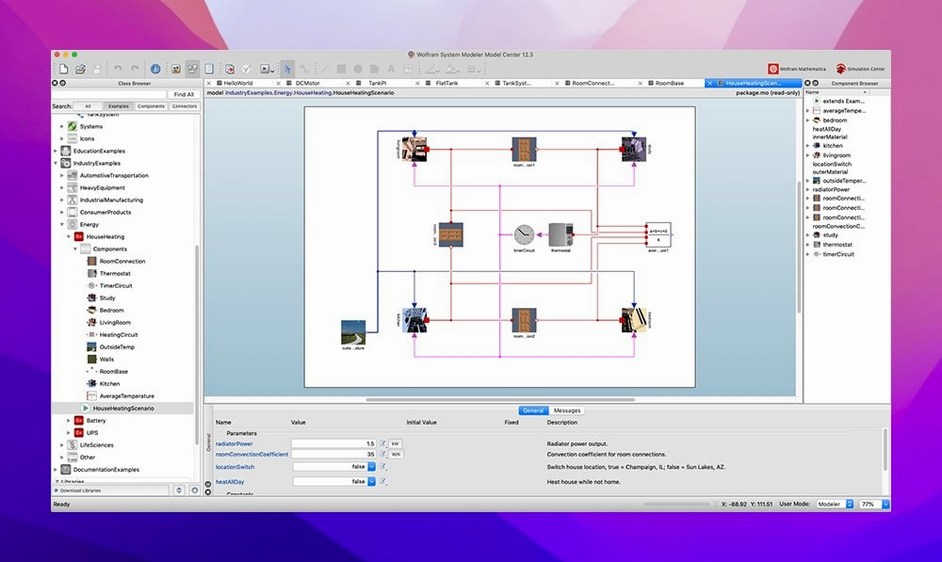
It gives you a graphical canvas to put models together, run simulations, and dig into the results without leaving the app.
Check macOS 11 and Intel processor required
Before you download, make sure your Mac runs macOS 11 or later and has an Intel processor. This version doesn't support Apple Silicon natively, so if you're on an M-series Mac, you may need to run it under Rosetta. The app speaks English and Japanese.
Build and compare model variants
You can switch between different model versions right from the interface, which makes exploring alternatives quick. Modelica-based modeling is supported, and you get built-in libraries you can extend with your own components.
Simulate and analyse in one click
One-click simulation gets you straight to results, and the whole thing ties into Wolfram Language for deeper analysis. It's a professional tool, so expect a learning curve — but the payoff is real.
OpenModelica and Simulink alternatives compared
If you're looking at systemmodeler mac download options, you'll probably also come across OpenModelica and Simulink (via MATLAB). Each takes a different approach, and knowing the differences helps you pick the right one.
OpenModelica is free and open-source, and it also uses Modelica. It's a solid choice if you're on a tight budget or prefer community-driven development. But the interface feels a bit rough around the edges compared to SystemModeler, and the Wolfram Language integration isn't there. If you need to do heavy post-simulation analysis or work with symbolic computation, SystemModeler gives you a smoother bridge to Mathematica.
Simulink is the heavyweight in block-diagram modelling. It's powerful, especially for control systems and signal processing, and it runs on macOS. SystemModeler, on the other hand, feels more open to multiphysics modelling out of the box, and the drag-and-drop interface is simpler to get started with. If you already use Wolfram Language for other work, SystemModeler fits naturally. If you live in MATLAB, Simulink makes more sense.
For a Mac-based engineer who wants Modelica support and a graphical environment without committing to a whole other platform, SystemModeler hits a sweet spot.
Workflow: simulate a simple mass-spring-damper system
Let's walk through a typical task so you can see how the pieces fit together.
Step 1: Start a new project. Open SystemModeler and create a new model. The graphical interface gives you a blank canvas and a component library panel on the side.
Step 2: Drag in components. From the built-in libraries, pull a mass, a spring, and a damper onto the canvas. You can also add a fixed point and a force source if you want to drive the system.
Step 3: Connect them. Draw connections between the components. The app snaps connectors together and shows you valid connection points, which saves time and prevents mistakes.
Step 4: Set parameters. Double-click each component to enter values — mass in kilograms, spring constant, damping coefficient. You can change these later to compare variants.
Step 5: Run a one-click simulation. Hit the simulate button. The app runs the model and opens the results view automatically. You get plots of position, velocity, and force over time.
Step 6: Animate the results. Switch to the 3D animation view. SystemModeler generates a visual representation of your mass moving on the spring, which makes it much easier to spot behaviour that numbers alone might hide.
Step 7: Tweak and repeat. Go back, change the damping coefficient, and simulate again. The model variant switching feature lets you keep both versions side by side, so you can compare outputs directly.
Once you're happy, you can export the model as an FMU to share with colleagues who use other simulation tools, or pull the data into Wolfram Language for custom analysis.
Fix broken connections and missing parameters
Model doesn't simulate. The most common reason is a missing or broken connection between components. Check that all ports are properly linked — the app highlights incomplete connections in a different colour. Also verify that every parameter has a value; leaving one blank can halt the simulation.
Results look wrong. Double-check your units. Modelica is unit-aware, but if you enter a mass in grams when the library expects kilograms, the numbers will be off. The built-in libraries use SI units by default, so stick with those unless you've changed the settings.
Animation doesn't appear. The 3D animation works only if your model has geometric components that map to visual elements. If you're using abstract blocks like transfer functions, there's nothing to animate. For physical models, make sure you've selected the animation option in the simulation settings.
Can't import a Modelica file. SystemModeler supports standard Modelica, but some third-party libraries use extensions or syntax that isn't fully compatible. Try simplifying the model to core components first, then add complexity once the import works. The app gives you error messages that usually point to the specific line causing the issue.
Performance feels slow on an M-series Mac. Since this version runs under Rosetta, you might notice a bit of overhead. Close other heavy apps while simulating, and consider simplifying models with large parameter sweeps. Native Apple Silicon support may come in future releases.
- macOS 11 or later
- Intel processor
- English or Japanese interface
Kit check at a glance
| System | macOS 11 or later |
| Chip | Intel 64-bit |
| Download | 601 MB |
| Older pressings | 1 in the crate |








Chat from the booth
Sign in or grab a free account to leave a comment.
Nobody has said a word in the booth yet. If you played a set with this build, tell the next person how it went.