- Build in the crate
- 2.1.5
- Made by the team at
- Toontrack
- Menu languages offered
- English
- How you pay for it
- k'ed by Team V.R
- macOS it plays on
- macOS 10.13 or later
- CPU it runs on
- Apple Silicon, Intel 64-bit
Screenshots
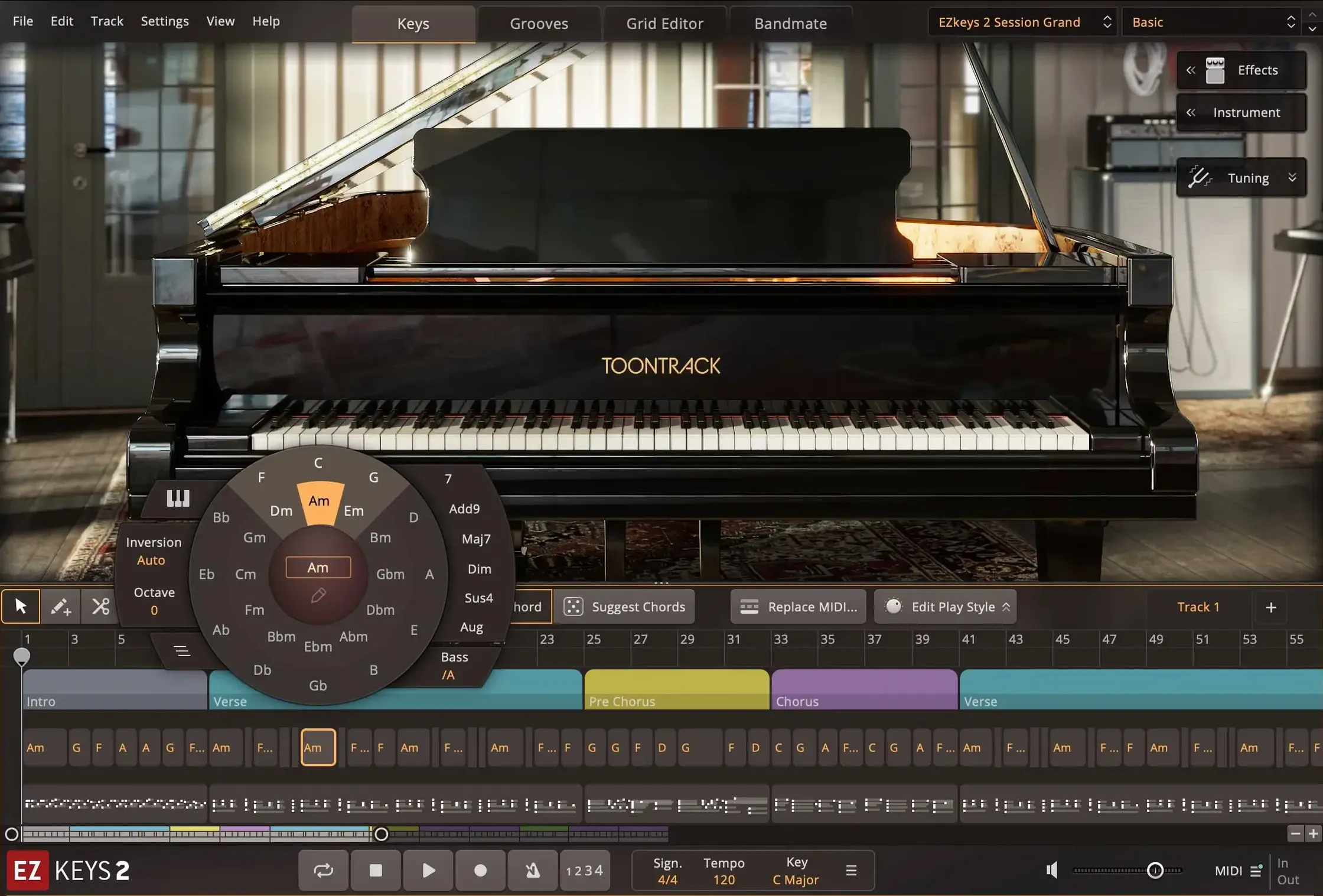
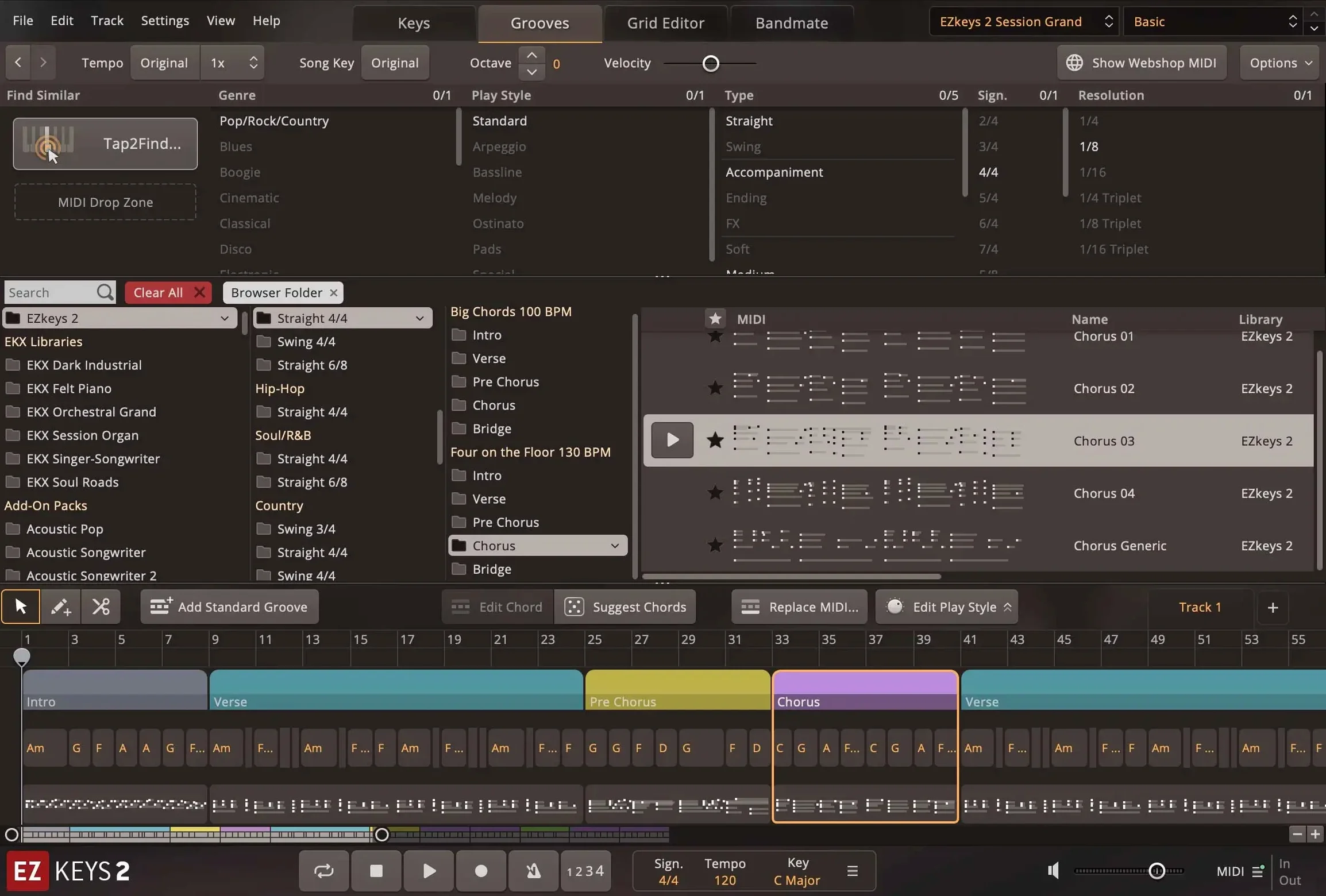
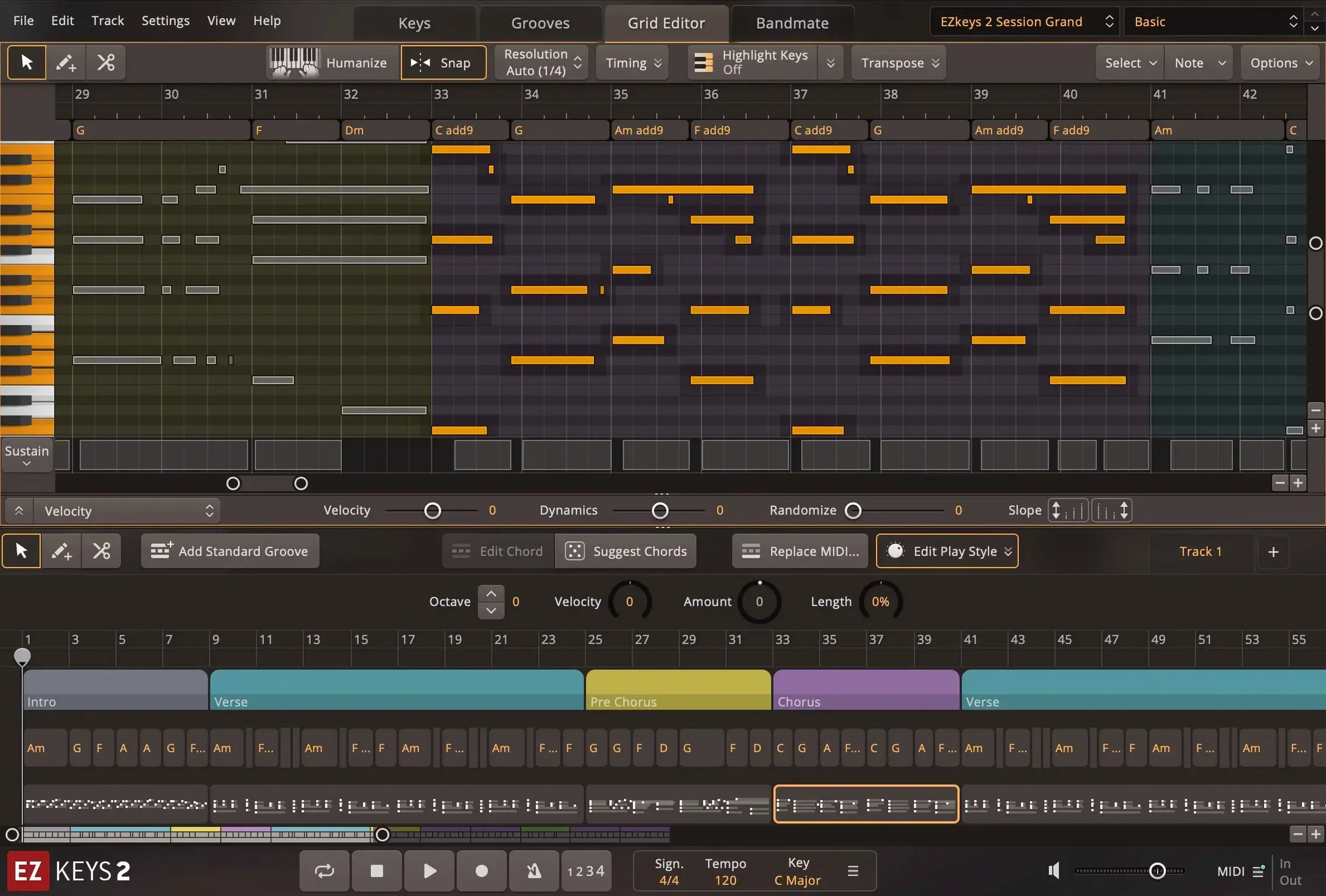
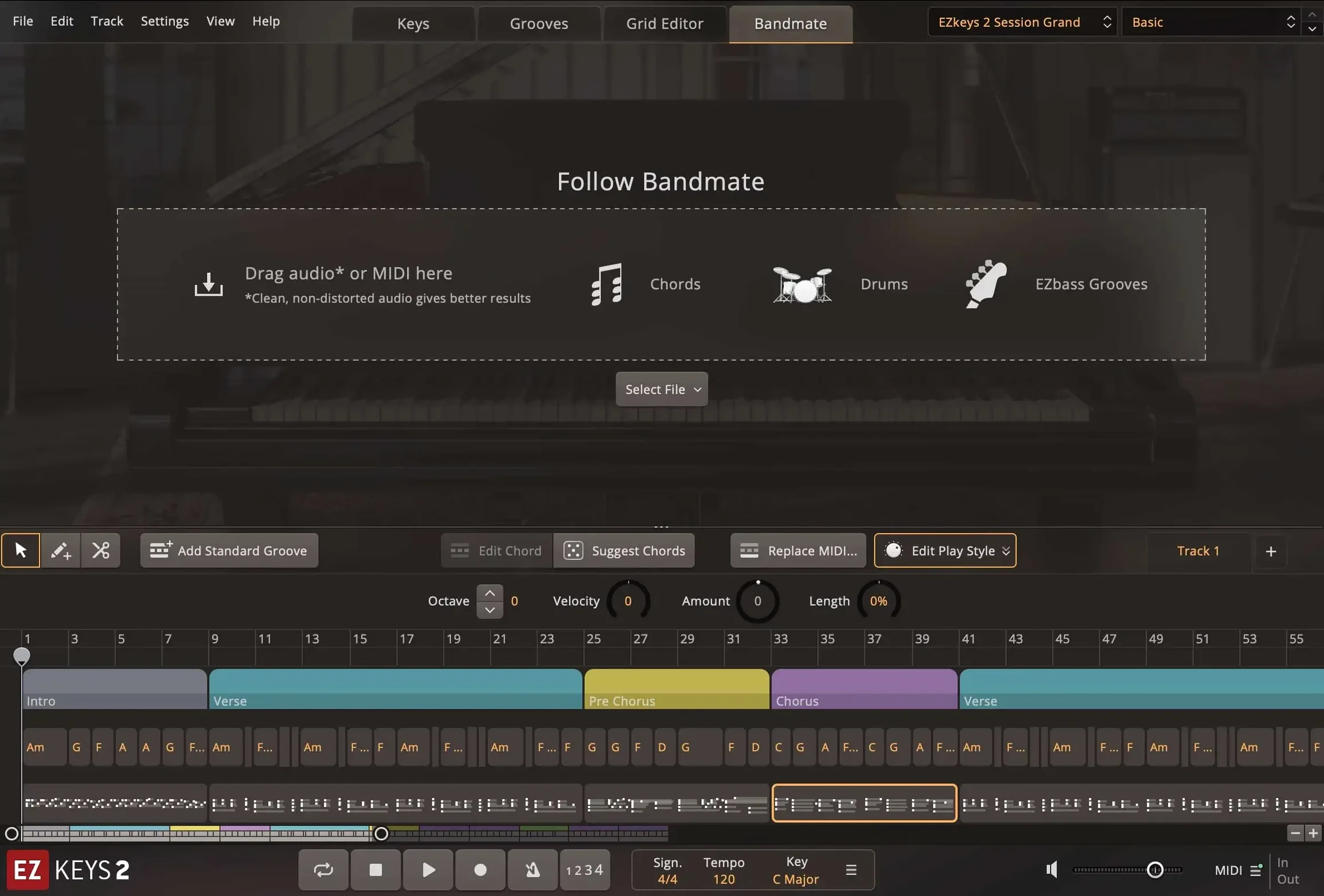
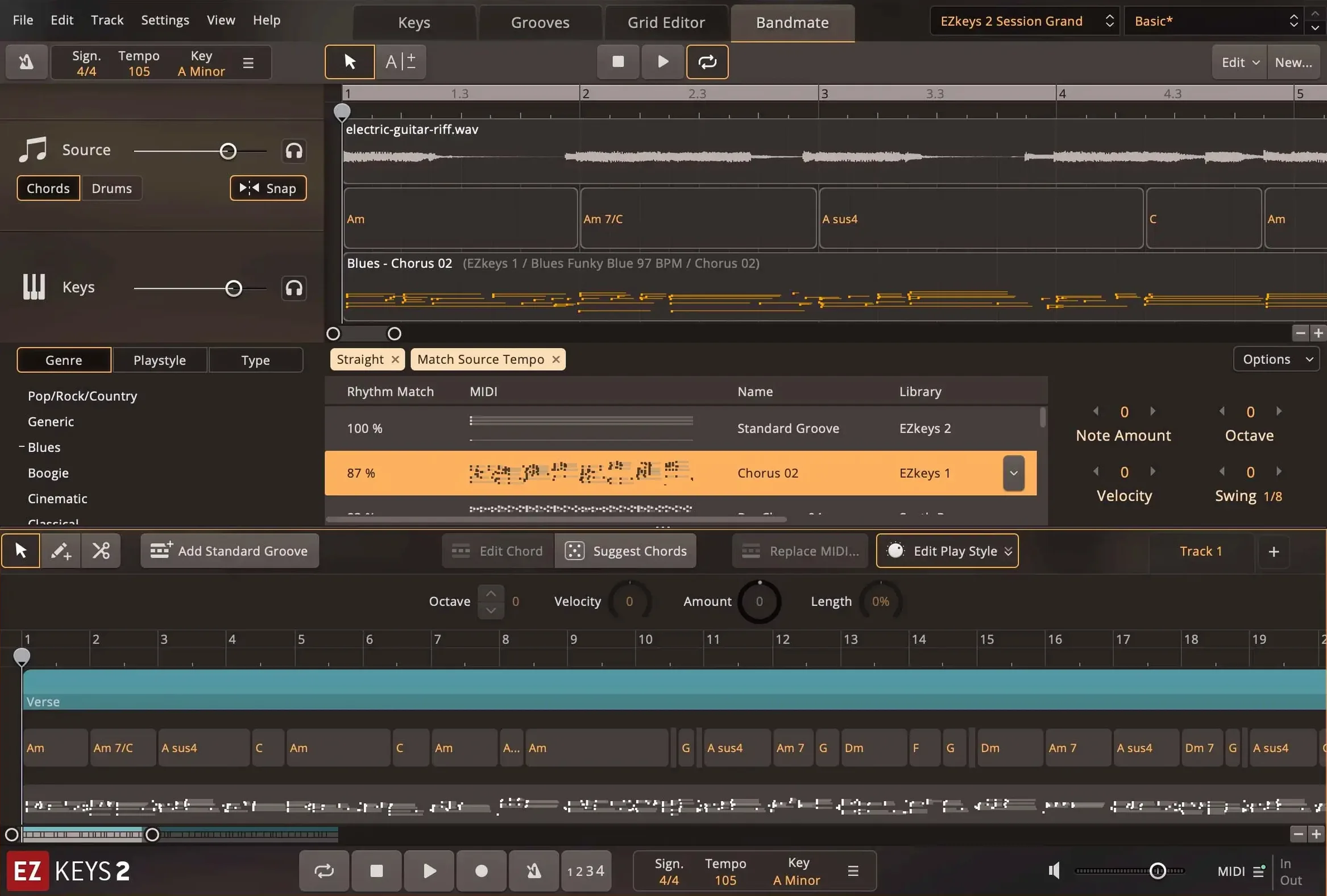
treating EZkeys as a plain sample player
The most frequent slip I see is treating EZkeys like a plain sample player. People load it, pick a preset and start playing, then wonder why their track sounds flat. The Fazioli F212 grand piano was recorded with multiple microphones and ambiences, and the mix-ready presets change the character quite a bit. Cycling through a few before you record can save you hours of EQ later.
Another one is ignoring the MIDI pattern library. Beginners often try to play every part by hand, even when they're not comfortable with the keyboard. The built-in patterns were played by professional pianists and cover a range of genres and playing styles. You can drag them into your DAW or arrange them inside EZkeys itself. It's faster and usually sounds more natural than a self-recorded part from someone still learning the instrument.
People also forget that Bandmate can generate chords and grooves from audio or MIDI. If you have a rough idea recorded as a loop, you can feed it into Bandmate and get a complementary piano part. That feature alone turns EZkeys into more of a songwriting tool than a simple instrument.
Fazioli F212 grand piano with multiple microphones
Putting EZkeys next to other piano instruments on Mac helps clarify what it's trying to do. Pianoteq uses physical modelling rather than samples, so it responds differently to velocity and pedal work. It's lighter on disk and more flexible in terms of tuning and tone shaping. But it doesn't come with the MIDI pattern library or the songwriting assistants that EZkeys bundles. If you need a piano that sounds recorded out of the box, the Fazioli captures that better than a modelled instrument.
Kontakt is a sampler host, not a piano instrument on its own, but many piano libraries run inside it. The disadvantage is that none of them include Bandmate, Tap2Find, the Chord Wheel or the Songwriting Scales that are built into EZkeys. You're paying for a piano sound and nothing else. EZkeys gives you the composition aids alongside the instrument, which is why songwriters tend to prefer it over a bare library.
Addictive Keys from XLN Audio is another sampled piano with a polished interface. Its sound is good, and it has a few built-in effects. But it lacks the generative features like Tap2Find and Bandmate. If you write from scratch at the keyboard, Addictive Keys might be enough. If you want the software to suggest parts or help you break out of a rut, EZkeys has the edge.
Chord Wheel for stuck moments
The Chord Wheel is tucked into the interface but it's useful beyond its obvious function. You can use it to find complementary chords when you're stuck, and it updates in real time as you play. Not a flashy feature, but it saves opening a music theory book mid-session.
The Songwriting Scales tool does what it says. Instead of guessing which notes fit the key, you can see them mapped out. It's especially handy if your music theory is rusty or if you're working in an unfamiliar key.
Within the Keys tab, the controls for the String Machine EKX instrument now feature a knob dedicated to the expression pedal. That was added in version 2.1.5. It's a small touch, but if you use the String Machine EKX extension, that pedal control makes it behave more like the real instrument.
The Tap2Find feature deserves a second look too. You tap in a rhythm and play a few notes, and it suggests accompaniments based on what you entered. It's easy to assume it's for beginners only, but experienced producers use it to generate parts they wouldn't have thought of themselves.
Finally, the interface is fully resizable and scalable. That matters more on a MacBook Air M2 screen than you'd expect. You can shrink it to fit alongside your DAW or scale it up for a better view of the controls. Not every virtual instrument remembers to include that.
- Added support for Transistor Organ EKX.
- Updated standalone and project icons to macOS Tahoe style on Mac.
- Improved performance with multiple CPU cores, especially on Mac.
- macOS 10.13 or later
- Intel or Apple Silicon processor
- Interface language: English
Kit check at a glance
| System | macOS 10.13 or later |
| Chip | Apple Silicon, Intel 64-bit |
| Download | 707 MB |
| Older pressings | 8 in the crate |

Chat from the booth
Sign in or grab a free account to leave a comment.
Nobody has said a word in the booth yet. If you played a set with this build, tell the next person how it went.