

- Build in the crate
- 2025.10.09
- Made by the team at
- Bastinus Rex
- Menu languages offered
- Russian, English, German, Spanish, Italian, Chinese (Traditional), Chinese (Simplified), Korean, Polish, Portuguese, Turkish, Ukrainian, French, Japanese
- How you pay for it
- Not required
- CPU it runs on
- Intel 64-bit
- Played on
- macOS Tahoe, Mac mini 2024 M4
- Dropped on
- 6.10.2025
- Spoken voice in
- French
Screenshots
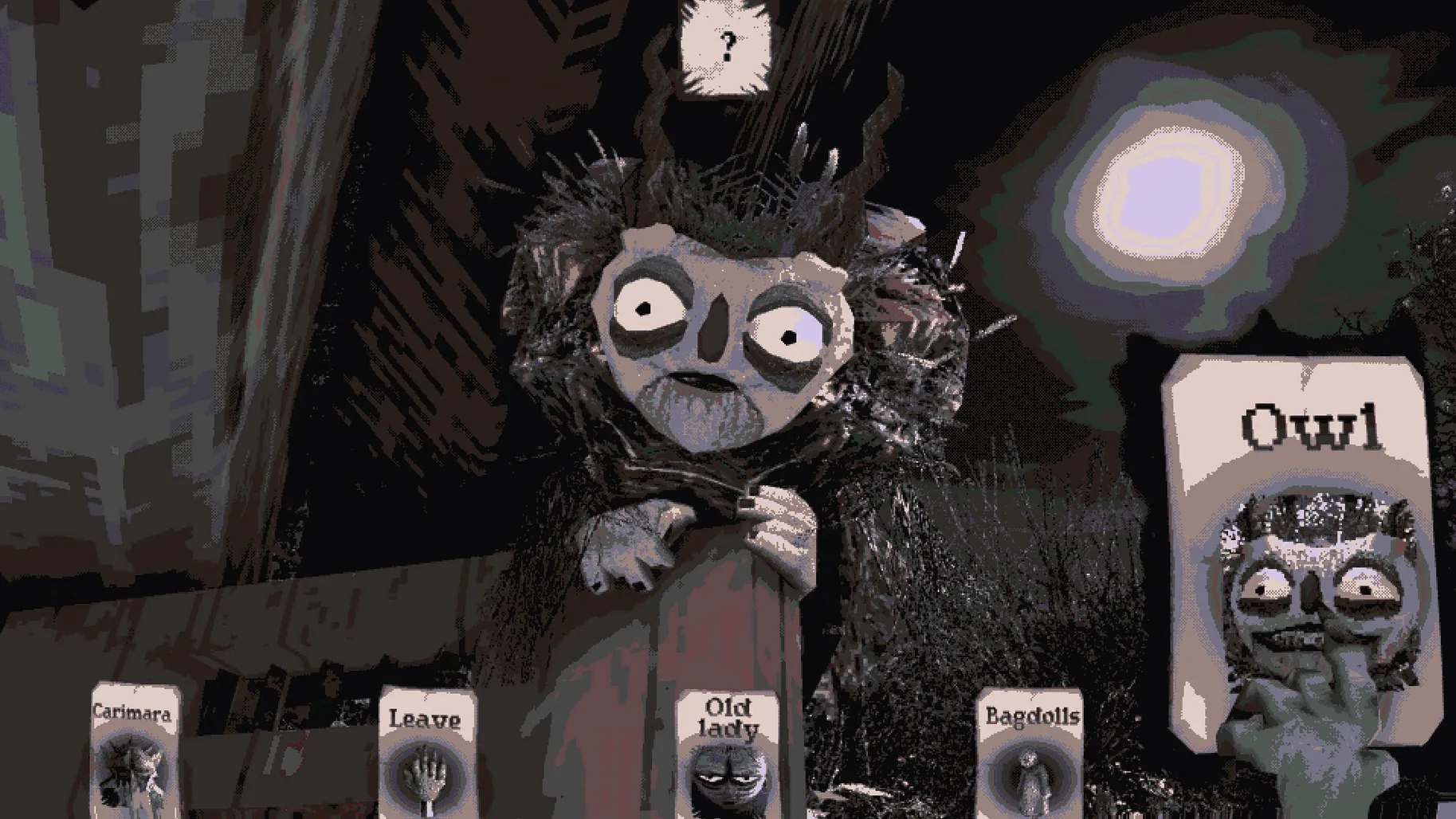
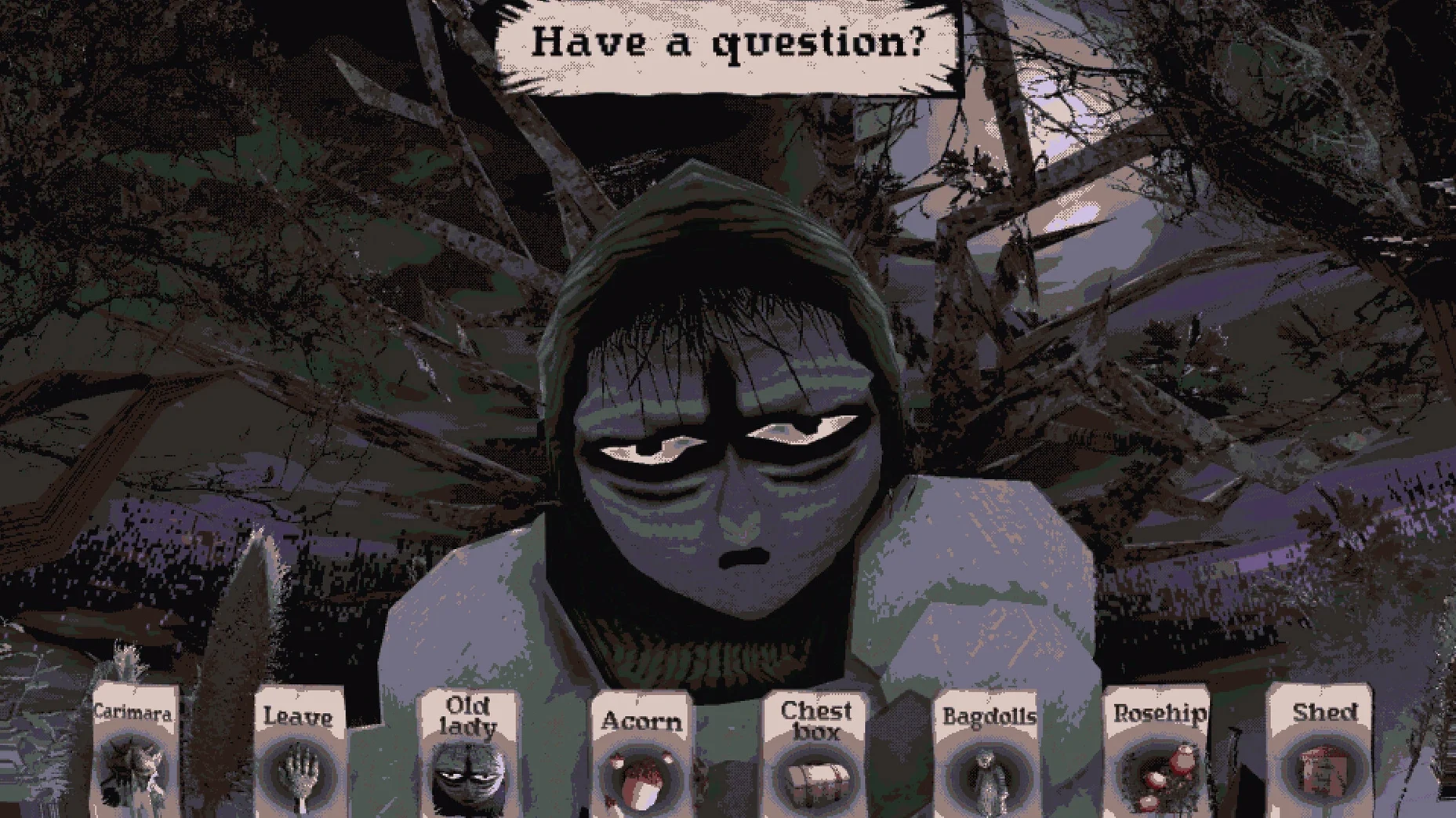
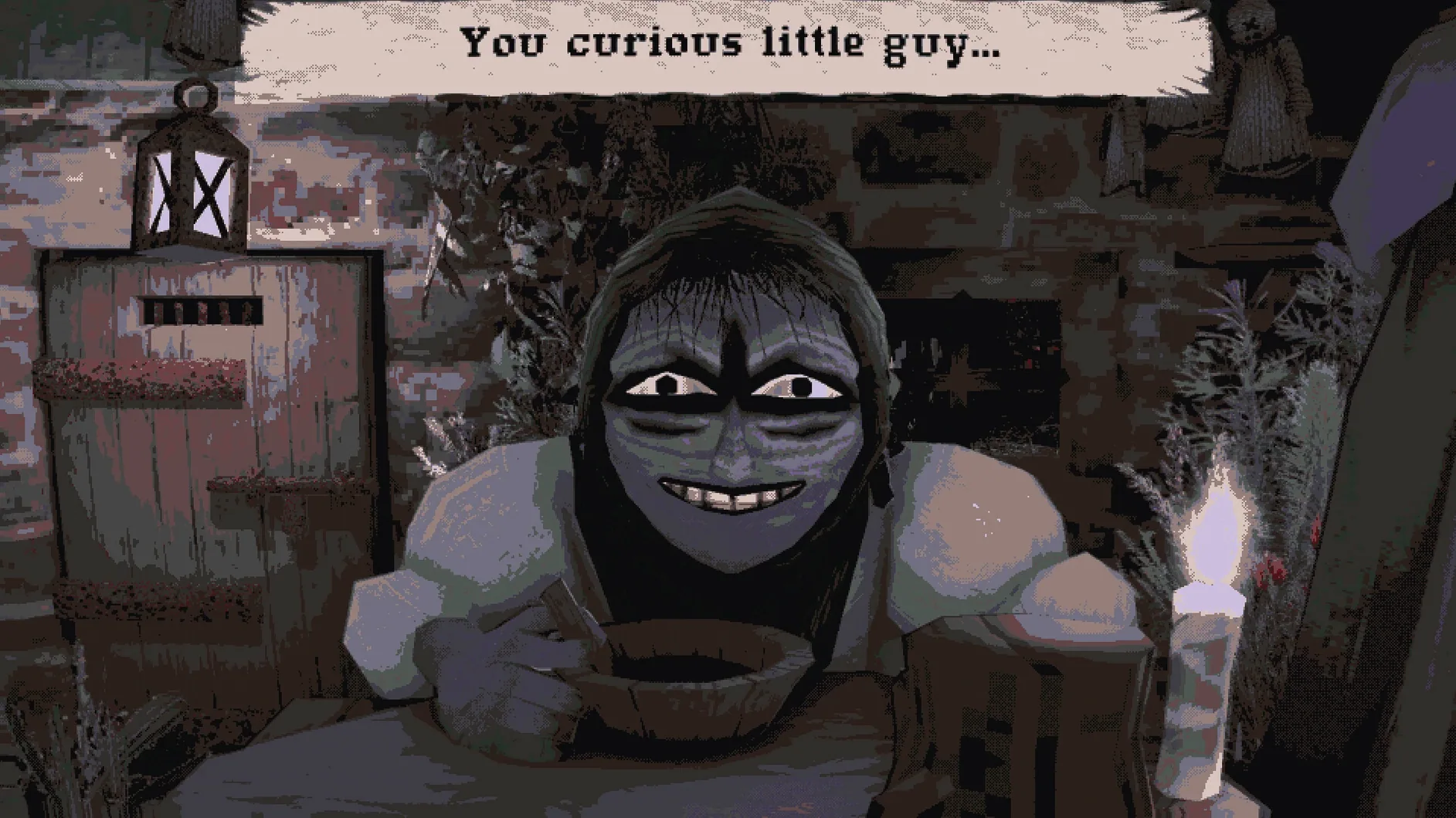
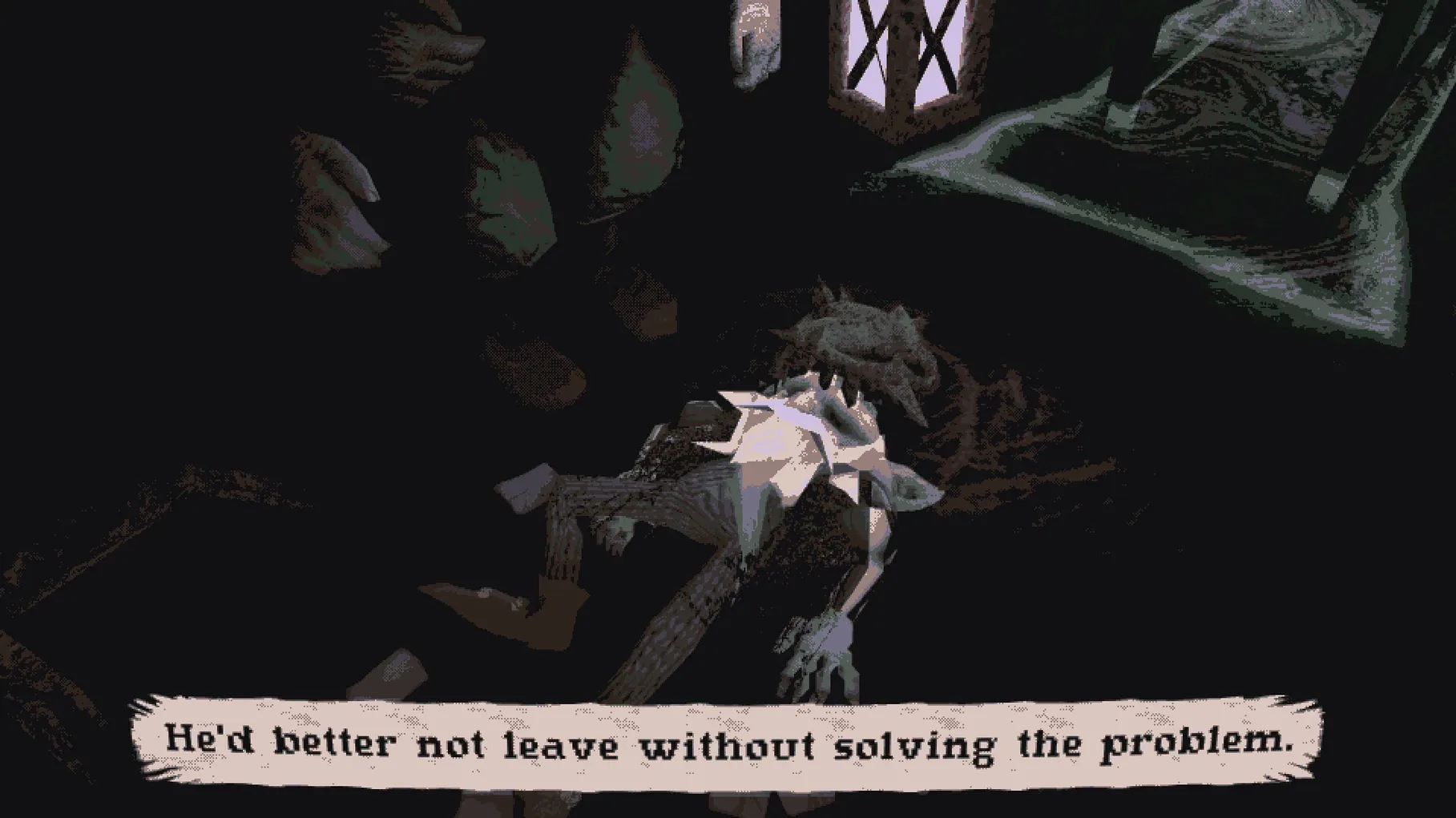
This one goes to the people who like stories more than stats. If you want a game where your main weapon is asking the right question, Carimara: Beneath the forlorn limbs fits right in. You control Carimara, a mute magical being who can’t cast spells or swing a sword. Instead, you explore a house where every object holds a memory, and you use a card-based dialog system to ask about it. Keep asking, and the story unfolds.
Best for one-hour horror sessions
- Short sessions or a single sitting — the whole game takes roughly an hour.
- Players who enjoy atmospheric horror driven by dialogue and discovery, not combat.
- Anyone curious about folk horror inspired by medieval Normandy legends.
Intel Macs only, no Apple Silicon
- Runs on Intel Macs; no Apple Silicon version yet.
- No spoken dialogue from the player character — everything is text and cards.
- Available in 14 languages including English, German, Spanish, French, Japanese and both Chinese scripts.
Don't treat cards like a menu
The card system looks simple, and it is — but a few habits can make the hour feel longer than it needs to be. The most common one is treating the cards like a menu of options you only use once. Each object in the house is described as a memory, and the cards let you dig deeper into that memory. If you only ask one question and move on, you miss the layered story underneath. Try using a card on the same object twice, especially if the first answer felt short.
Another mistake is ignoring objects that seem ordinary. A coat hook, a dusty bowl, a crack in the wall — in a game this short, nothing is decoration. Every item that lets you interact has something to say. Beginners sometimes walk past these because they expect a puzzle cue or a glowing highlight. There aren’t many. Point-and-click here means clicking on anything that looks like it belongs in the house.
Some players also expect the cards to behave like a conversation wheel in a bigger RPG. They don’t. You’re not choosing dialogue branches. You’re asking a mute character’s questions through symbols. If you treat each card as a different "flavour" of the same question, the quiet horror of the setting starts to click.
Point-and-click, no controller needed
People often wonder if the game needs a controller or works better with a mouse. It’s pure point-and-click, so a trackpad or mouse works fine. No complex controls, no keyboard shortcuts to memorise. You click on objects and select cards. That’s it.
Another question is about the atmosphere. Some worry that a one-hour horror game with no combat won’t feel tense. The tension comes from the writing and the card system itself. You never know which question will open a door — sometimes literally. The house is shaped by grief, and the cards let you probe that grief at your own pace. It’s unsettling, not jump-scare horror.
People also ask about replay value. At roughly one hour, you can finish it in a single evening. The story is linear, but the card system means you might get different fragments depending on what you ask and in what order. A second playthrough with a different approach can reveal things you missed the first time.
Perfect for one-hour story breaks
This game suits Mac users who want a complete story in a short window. If your gaming time comes in one-hour chunks between work, study or other responsibilities, Carimara fits that slot naturally. No save-scumming, no grinding, no mid-game tutorials that take forty minutes.
It also works well for players who enjoy narrative experiments. The card-based dialog instead of spoken lines, the mute protagonist, the medieval Normandy folk inspiration — it’s not trying to be a mainstream horror title. If you play games partly to see what different developers do with the form, this is worth the hour.
And for Mac users who run older Intel machines, it’s a rare treat. Most new narrative games skip Intel support or demand an M-series chip. Carimara still runs on Intel architecture, so if you’ve been watching newer releases pass you by, this one actually works on your hardware. That alone makes it worth a look.
- macOS (exact version not specified by developer)
- Intel processor
Kit check at a glance
| Chip | Intel 64-bit |
| Download | 270 MB |







Chat from the booth
Sign in or grab a free account to leave a comment.
Nobody has said a word in the booth yet. If you played a set with this build, tell the next person how it went.