
- Build in the crate
- 1.5.1
- Made by the team at
- XLN Audio
- Menu languages offered
- English
- How you pay for it
- K'ed by TEAM HCiSO
- macOS it plays on
- macOS 10.13 or later
- CPU it runs on
- Apple Silicon, Intel 64-bit
Screenshots
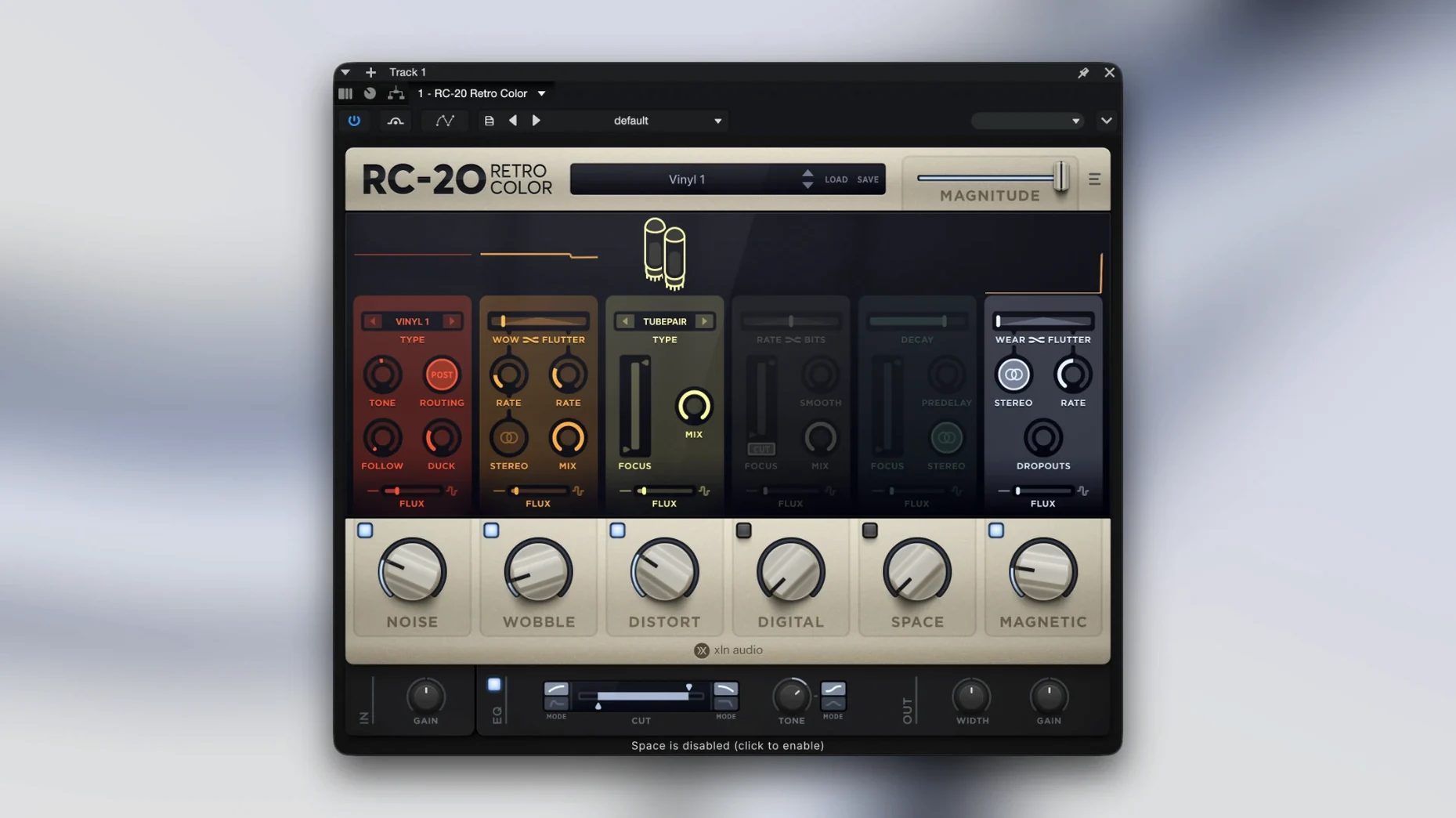
You drop a vocal take into your session, and it sounds too clean, too digital. You want that worn, slightly imperfect character of an old tape machine. RC-20 Retro Color is the plugin that gets you there without a rack of vintage hardware.
Plugin formats and system requirements
| Detail | Info |
|---|---|
| Version | 1.5.1 |
| Formats | VST, AU, AAX |
| macOS | 10.13 or later, 64-bit only |
| Architecture | Intel and Apple Silicon |
| Language | English |
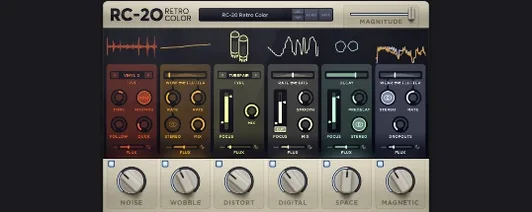
It runs as a plugin in your DAW, so you can insert it on individual tracks or the master bus. The module set — noise, wobble, distort, digital, space, and magnetic — gives you six flavours of imperfection to blend. The Flux engine adds subtle random variation over time, so the effect never sits still. Presets cover everything from subtle tape warmth to heavy lo-fi crunch, and there's an in-app link to the manual if you want to dig deeper.
Setting up a session with RC-20
Here's how it typically goes when I reach for RC-20 in a track. I start with a clean drum loop — something I programmed in the box that sounds a bit sterile. I load RC-20 on the track and start from scratch, turning off all modules first. Then I bring in the Magnetic module alone. It adds that gentle pitch flutter and high-end roll-off you'd get from a worn cassette deck. Already the loop sounds like it was pulled from an old record.
Next I add a touch of Noise. Not the heavy crackle — just a low level of vinyl surface noise in the quiet parts. The module has a mix control, so I blend it until it's barely there. That's enough to give the loop a sense of space and age without overpowering the transients.
For the bass line underneath, I use the Distort module. I push it just past the point where the saturation starts to soften the attack. The Flux engine is key here — it introduces tiny variations in the distortion character over time, so the bass doesn't sound like a static effect is sitting on it. It breathes.
Modules remember on/off state across presets
One thing that's easy to overlook is how each module remembers its own on/off state when you switch presets. That means you can audition different noise textures while keeping your wobble settings intact. The module solo button is another time-saver — you can isolate one effect to hear exactly what it's contributing, then bring the others back in.
The Flux engine has its own depth control. Crank it up and the random variation becomes pronounced; dial it down and the effect stays more consistent. You can set it per module, so the wobble might drift faster than the magnetic flutter. That kind of control means you can craft motion that feels organic rather than repetitive.
All six modules work independently, so you can use RC-20 as a simple noise generator or a full vintage processing chain. There's no requirement to activate them all. I often use just the Space module with a short reverb tail on a snare — it gives it that boxy room sound from a 70s recording without any tape character.
EQ placement before or after RC-20
RC-20 sits well alongside more clinical plugins. I'll often use a parametric EQ to clean up frequencies first, then hit RC-20 for character. The order matters: EQ before RC-20 means you're colouring a cleaner signal, while RC-20 before EQ lets you shape the noise and distortion after they've been added.
It also works with macOS features like Audio Units bridging. If you're running Logic Pro, RC-20 appears as an AU plugin natively, no wrapper needed. On GarageBand it works the same way. The native Apple Silicon support means it loads fast on current Macs without Rosetta translation, which keeps your session responsive when you have several instances running.
I sometimes use it on the master bus of a finished mix — just a light touch of the Digital module to shave off some high-end brightness, like a vintage ADC. Combined with the Flux engine, the whole mix gets a subtle instability that makes it feel less polished and more like a real recording.
More flexible than iZotope Vinyl
There are a few other plugins that aim for the same vintage character. iZotope Vinyl is free and does the crackle and warble thing, but it's more of a one-trick pony — you get noise, wear, and electrical interference, but no distortion or space modules. It's great for quick lo-fi effects, but you don't get the same depth of control.
Then there's Soundtoys Decapitator, which focuses on saturation and distortion. It's excellent for adding harmonic colour, but it doesn't have the noise, wobble, or magnetic flutter modules that give RC-20 its tape-like motion. Decapitator is more about drive and tone shaping; RC-20 is about the whole vintage vibe, including the imperfections.
Cableguys ShaperBox has a Noise shaper that can add crackle, but it's more about rhythmic gating and effects than emulating vintage gear. RC-20 covers more ground in one plugin: you get the noise, the wobble, the distortion, the digital grit, the reverb space, and the tape flutter all in one interface. That's why it often ends up on my session tracks — it does the full retro colour palette without bouncing between multiple plugins.
- macOS 10.13 or later
- 64-bit only
- Intel or Apple Silicon
Kit check at a glance
| System | macOS 10.13 or later |
| Chip | Apple Silicon, Intel 64-bit |
| Download | 170 MB |
| Older pressings | 3 in the crate |






Chat from the booth
Sign in or grab a free account to leave a comment.
Nobody has said a word in the booth yet. If you played a set with this build, tell the next person how it went.