

- Build in the crate
- 1.0.5.102999
- Made by the team at
- Pocketpair
- Menu languages offered
- Russian, English, German, Spanish, Italian, Chinese (Traditional), Chinese (Simplified), Korean, Portuguese, French, Japanese
- How you pay for it
- Not required
- CPU it runs on
- Apple Silicon
- Played on
- macOS Tahoe, Mac mini 2024 M4
- Dropped on
- 19.01.2024
- Spoken voice in
- Music only
Screenshots



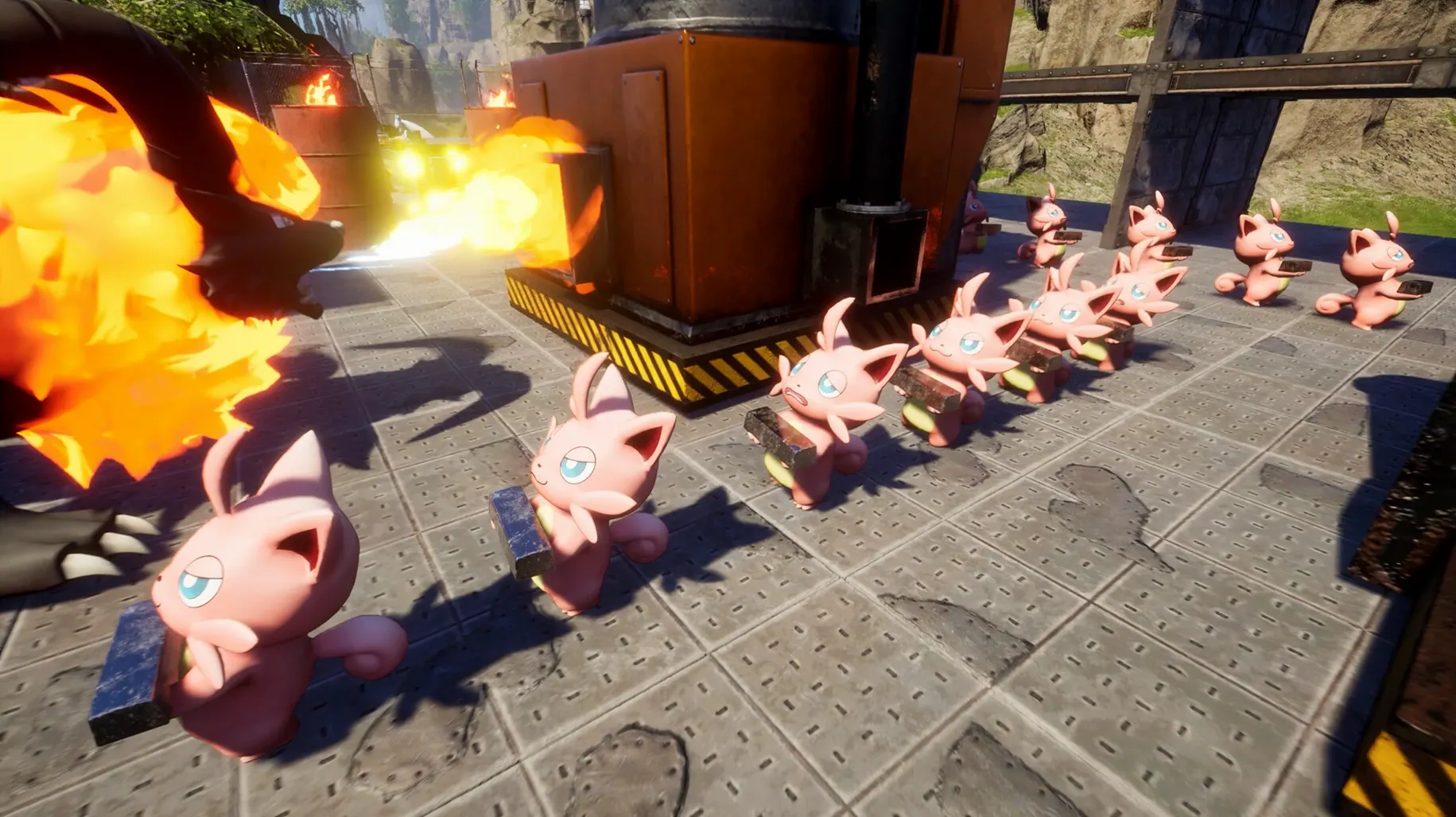




Palworld solves a simple problem: survival games get repetitive once you have built your base and gathered enough wood. This one keeps throwing new things at you, mostly because your Pals do half the work and the other half is riding them into trouble.
- Capture Pals and send them into battle – they fight alongside you against poachers and wild creatures.
- Ride Pals to travel across land, water and air, which makes exploring the open world faster and more fun.
- Farming with Pals: they sow, water and harvest crops while you handle the bigger picture.
- Build bases and set up industrial automation – conveyor belts, production lines, that sort of thing.
- Breeding matters: Pals inherit traits from their parents, so you can plan your team.
- Multiplayer is there, so you can build and explore with friends.
It launched on 19 January 2024 and the current build runs on Apple Silicon Macs. The interface speaks eleven languages, including English, Spanish, French, German and Japanese. If you like survival games but want more creatures and fewer empty hours, this is a solid pick.
Plays offline in single-player mode
People often ask whether Palworld works offline. It does. The game has a single-player mode that does not require an internet connection after the initial download. Multiplayer is optional, so you can play entirely on your own if that is your preference.
Another frequent question is about save files. Palworld saves your progress automatically, and you can also create manual backups if you want to be safe. The save data lives on your Mac, so nothing gets lost if you stop playing for a while and come back later.
Some wonder whether the game is demanding on Apple Silicon Macs. Palworld is built for ARM architecture, so it runs natively on M1, M2, M3 and M4 chips. The developers have optimised it for these processors, which means it makes good use of the hardware without needing emulation layers.
People also ask about controller support. The game works with keyboard and mouse, but many players prefer a gamepad for riding Pals and exploring. You can connect a PlayStation or Xbox controller via Bluetooth and it should be recognised straight away.
Assigning Pals to specific base tasks
One feature that is easy to miss is the ability to assign Pals to specific tasks at your base. Instead of letting them wander around doing whatever they want, you can pick which Pal works on which station. This makes production lines much more efficient.
Another handy thing: you can rename your Pals. If you have a team of identical creatures and want to tell them apart, just change their names. It helps when you are breeding and tracking specific traits.
The map markers are also worth using. You can place custom markers on the map to remember where you found rare resources or a dungeon entrance. This saves time when you come back later to farm materials.
Fast travel points exist too. Once you discover a fast travel statue, you can warp back to it from anywhere on the map. That cuts down on travel time significantly once you have explored a bit.
Deep base building for survival veterans
Survival game veterans will find plenty to sink their teeth into. The base building and automation systems are deep enough that you can spend hours optimising production chains. If you enjoy games like Minecraft or Ark, Palworld will feel familiar but with a creature-collecting twist.
Players who like open-world exploration will also enjoy it. The map is large and varied, with different biomes to discover. Riding Pals across land, water and air makes traversal feel rewarding rather than tedious.
Co-op players are well served too. You can invite friends to your world and build together. Pals can be shared between players, and you can tackle dungeons as a team. This turns the survival loop into a social activity.
People who enjoy creature collectors like Pokémon will find the breeding and trait system interesting. Planning which Pals to breed for specific stats or abilities adds a layer of strategy that goes beyond just capturing everything you see.
Neglecting Pal hunger and rest needs
The most common mistake is neglecting your Pals' needs. Pals get hungry and tired. If you do not feed them or give them rest, they stop working effectively. Keep a stock of food at your base and build beds for them to sleep in.
Another error is trying to fight everything alone. Your Pals are there to help. Send them into battle and use their abilities. Trying to take on a tough creature without your team usually ends badly, especially early on.
Some beginners ignore the technology tree. You unlock new buildings, weapons and tools by spending technology points. If you do not check the tree regularly, you might miss important upgrades that make survival easier.
People also forget to build storage early. Your inventory fills up fast when you are collecting resources and capturing Pals. Build chests at your base and organise them by material type. It saves a lot of time later.
Finally, some players rush into dangerous areas before they are ready. The world has zones with stronger creatures and harsher conditions. Take time to build up your base, level up your Pals and craft better gear before venturing too far from your starting area.
- macOS: not specified
- Architecture: Apple Silicon
Kit check at a glance
| Chip | Apple Silicon |
| Download | 31 GB |








Chat from the booth
Sign in or grab a free account to leave a comment.
Nobody has said a word in the booth yet. If you played a set with this build, tell the next person how it went.