
- Build in the crate
- 0.1.0.1
- Made by the team at
- Devon Powell, Xueer Zhu
- Menu languages offered
- Russian, English, German, Vietnamese, Spanish, Italian, Chinese (Traditional), Chinese (Simplified), Korean, Polish, Portuguese, Thai, Turkish, Ukrainian, French, Japanese
- How you pay for it
- Not required
- CPU it runs on
- Apple Silicon, Intel 64-bit
- Played on
- macOS Golden Gate, Mac mini 2024 M4
- Dropped on
- 7.09.2026
- Spoken voice in
- Music only
Screenshots
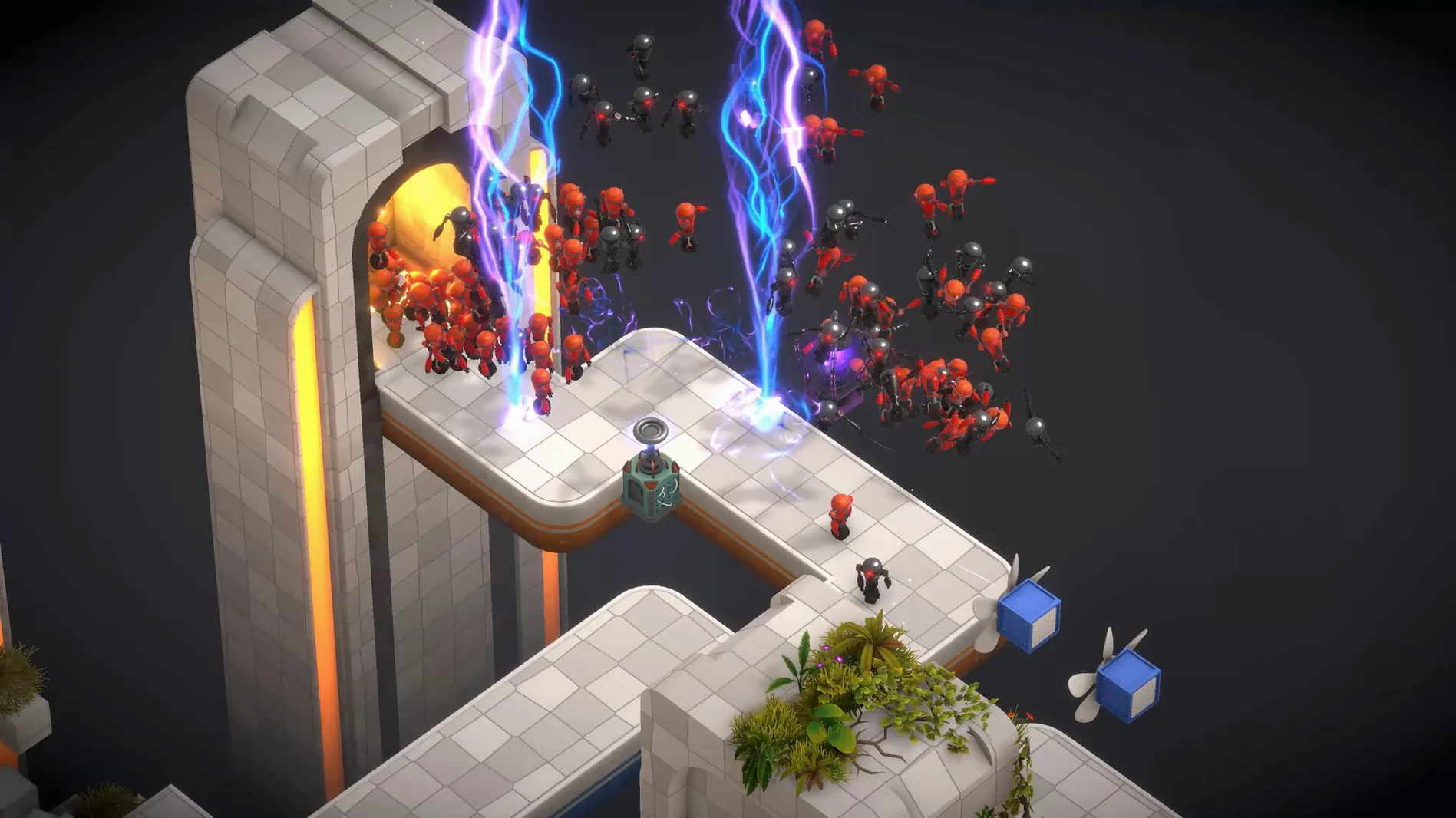
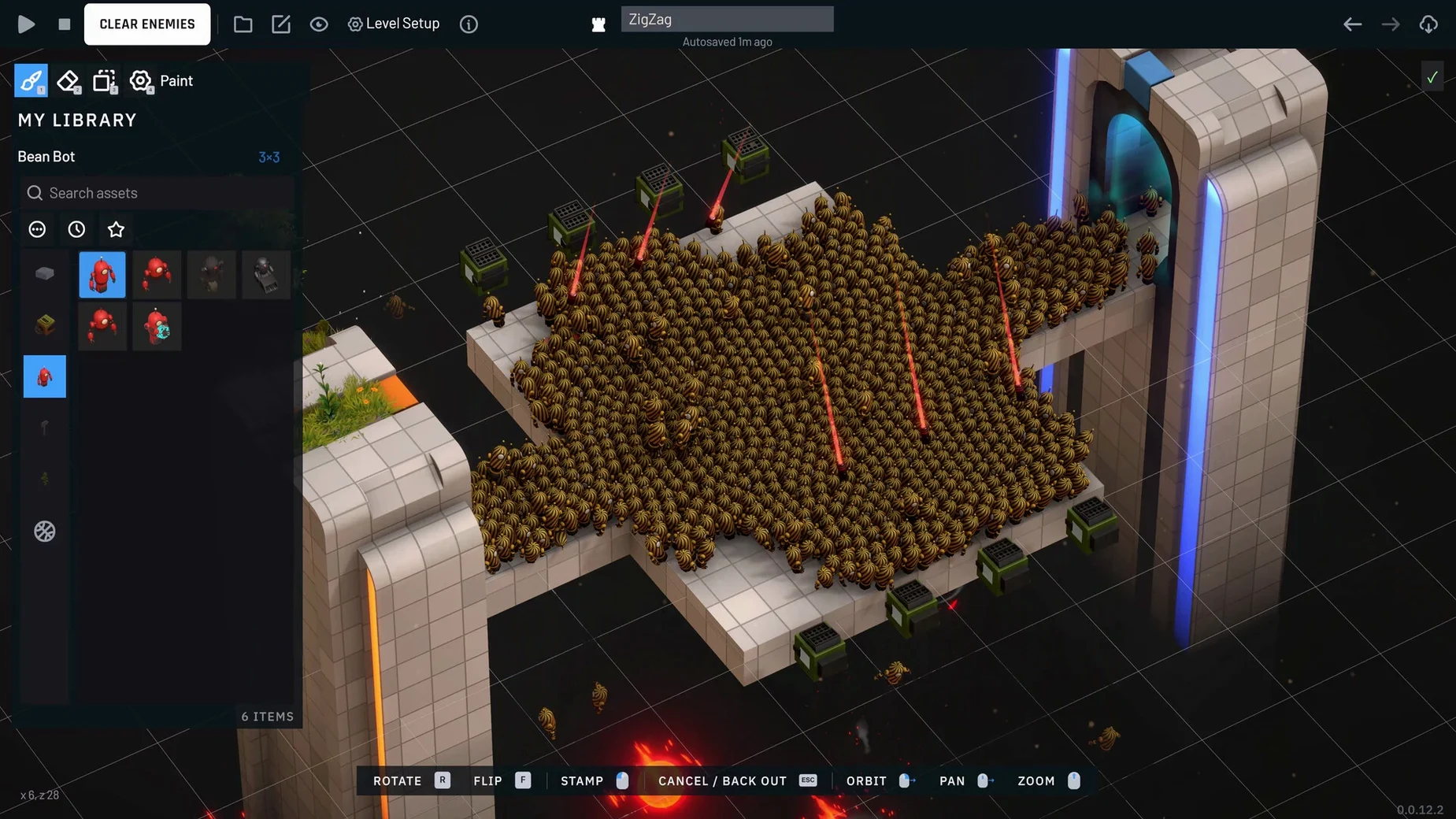
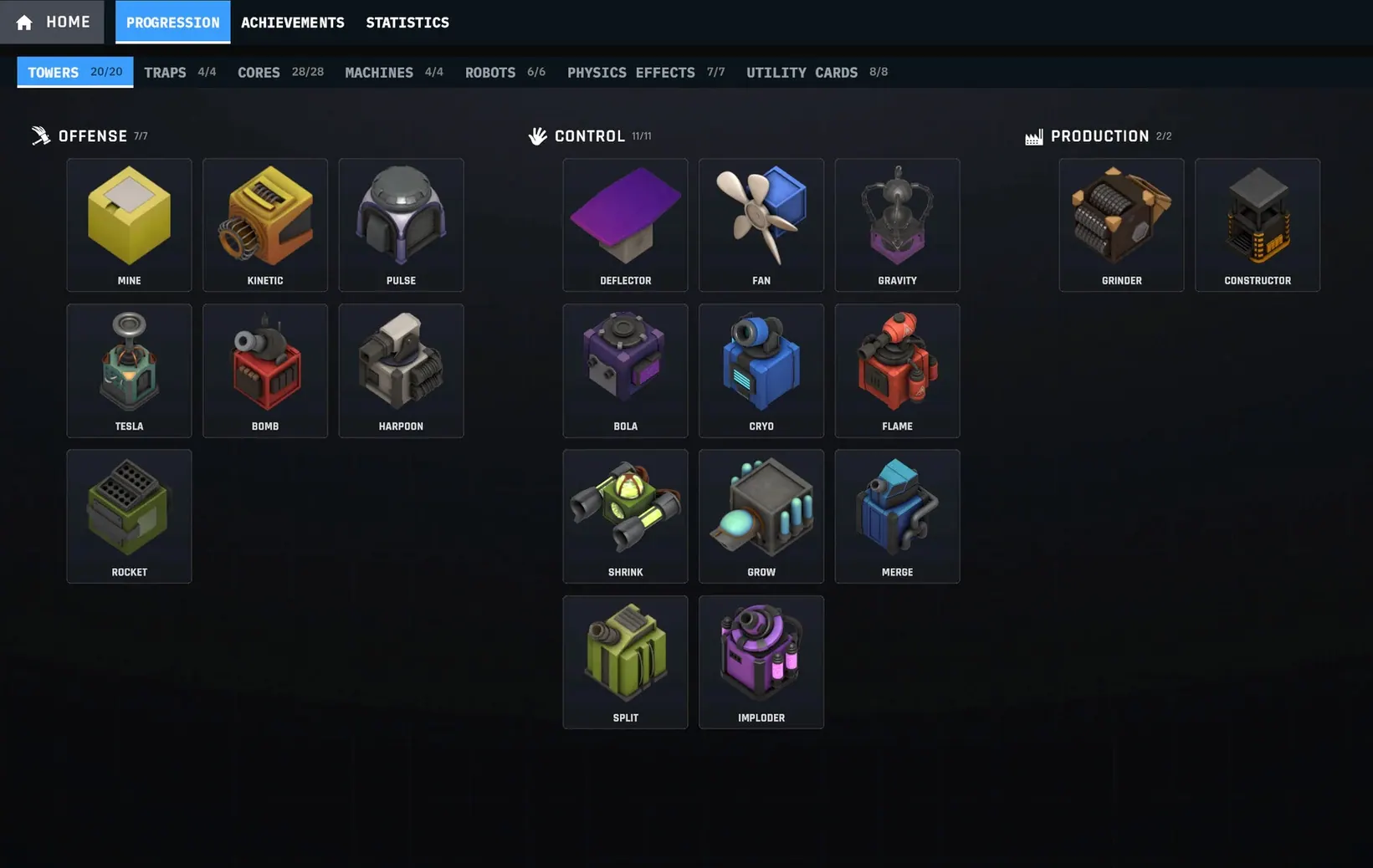
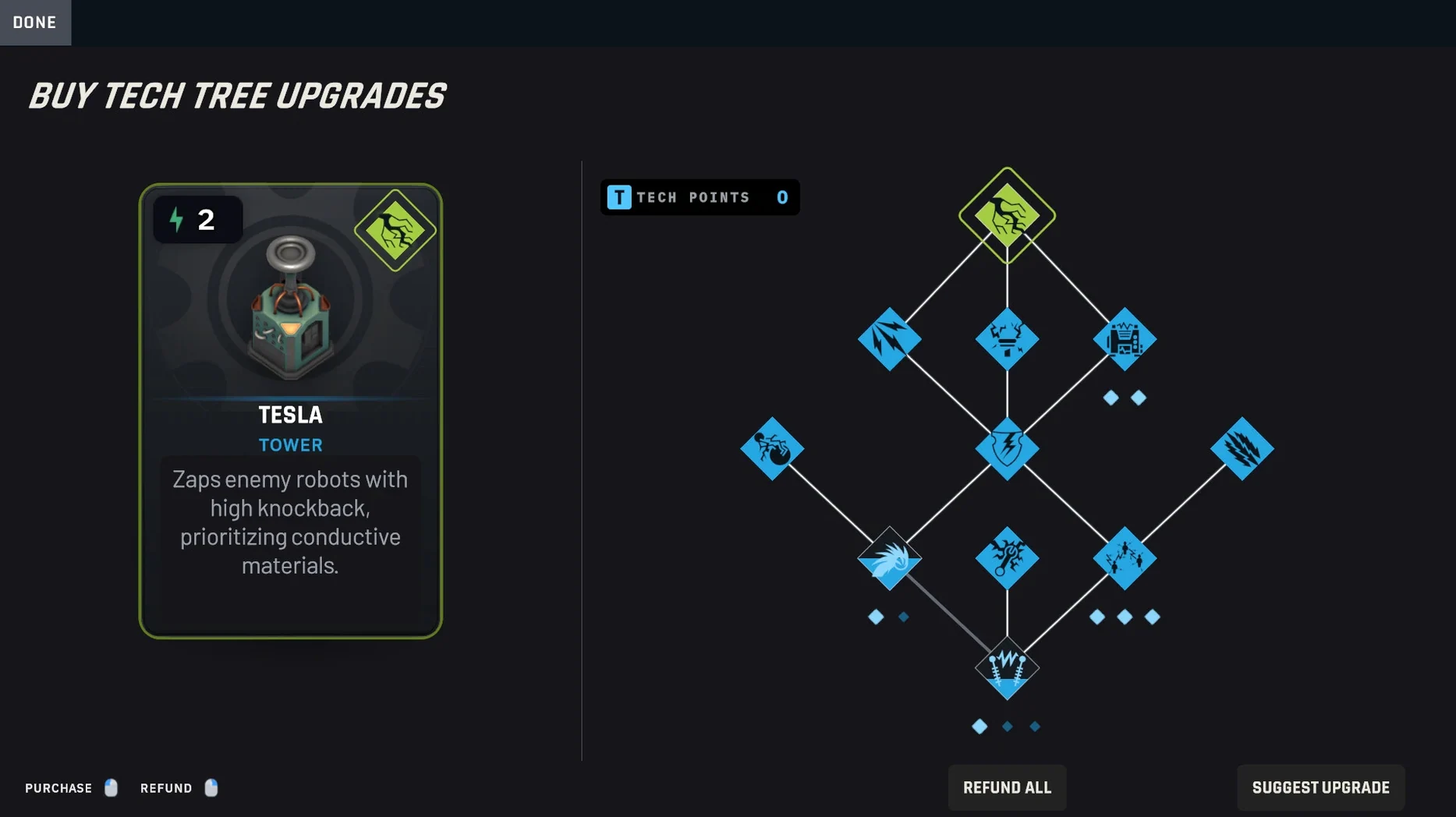
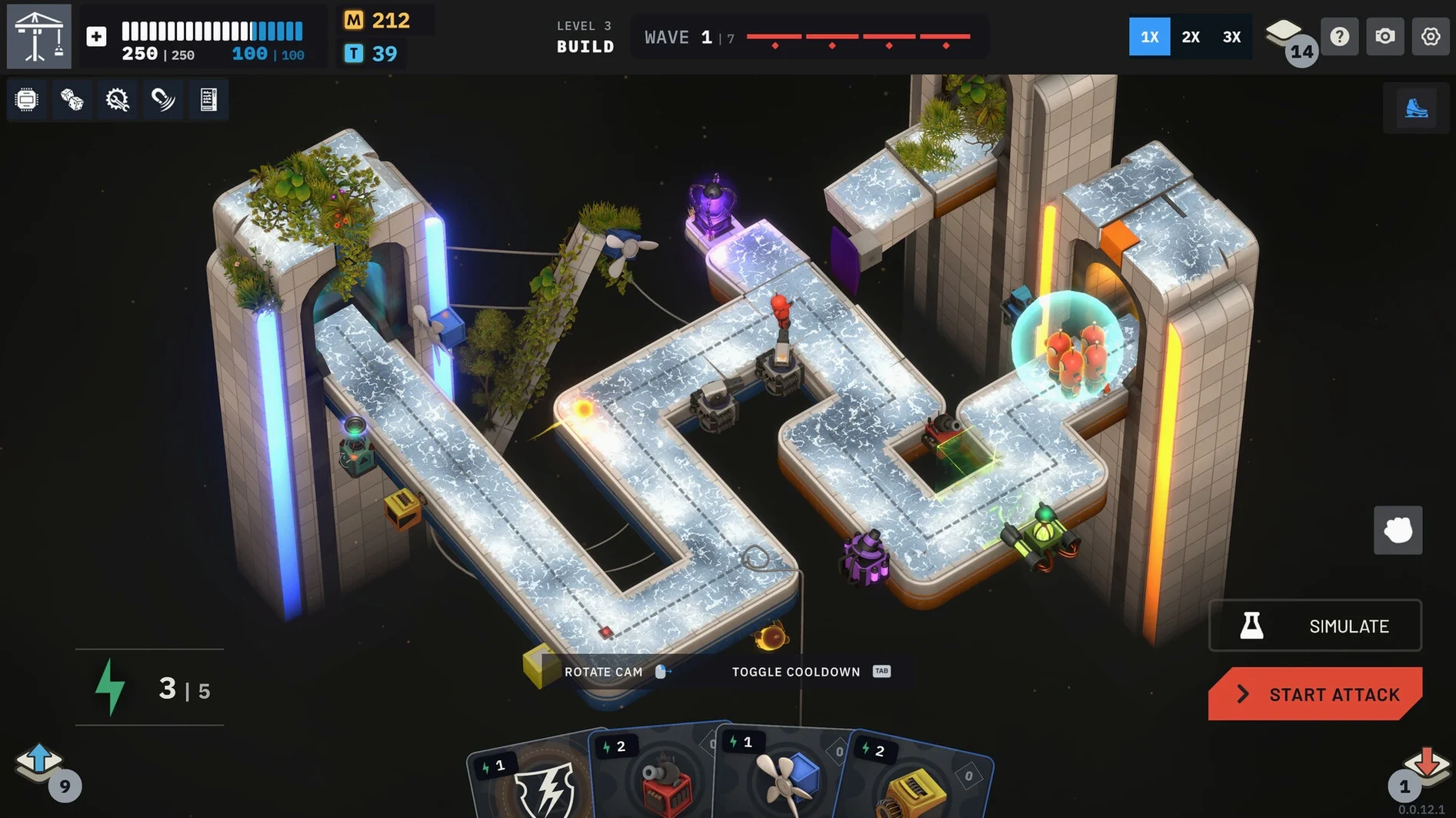
Tower Lab is a bit like setting up dominoes, only the dominoes are robots and the floor is a cliff edge. It's a physics-based tower defense game where your goal isn't to drain health bars — enemies have none. Instead, you knock them off the map.
Chaining tower effects to tip enemies
You place towers that push, pull, or bounce incoming robots. Some towers yank enemies closer; others send them flying. The fun is in chaining those effects together to tip a whole line over the edge.
Can you reposition towers?
Yes, towers can be moved at any time. That matters because the action shifts fast, and a tower that worked for one wave might be useless for the next. You can also remove cards from your hand if they're not fitting your plan.
What's the reward for bigger robots?
Robots can be enlarged for higher rewards. It's a risk-reward play: a bigger target is easier to hit, but if it reaches your base, that's more trouble. You're always weighing the payout against the risk.
Runs on Apple Silicon and Intel Macs
Tower Lab runs on both Apple Silicon and Intel Macs — no architecture lock-in here. The current build, version 0.1.0.1, was tested on macOS Golden Gate with an M4 Mac mini, so it's ready for modern systems. No activation is required, and the interface supports twenty languages, including English, French, Japanese, Korean, and both Simplified and Traditional Chinese. Voice and audio are covered by the music track, so don't expect spoken dialogue.
Given the Early Access status, the game is still being shaped. The first patch is already out, which suggests the developers are actively refining the physics and campaign balance. If you've been curious about physics-driven tower defense but didn't want to wait for a final release, this is a chance to see it evolve.
A campaign run from scratch
Here's one way to approach a fresh campaign. Start by placing a pushing tower on open ground near a chokepoint — any free space works, so you don't need to follow predefined slots. As the first robots approach, watch how their mass affects their movement. Heavier bots barely budge, so you'll want to adjust tower mass from the menu to give that tower more oomph.
After the first few waves, you'll earn currency. Shrunk robots are easier to push, which lets you clear waves with fewer towers. Later, you might find a card that enlarges projectiles. Pair that with a bouncing tower to send a single shot ricocheting through a crowd. If a card doesn't suit your build, remove it from your hand to keep your deck tight.
As the campaign progresses, revisit the shop to update its assortment. New items can unlock strategies you hadn't considered, like pulling enemies into a trap zone or enlarging robots on purpose for bonus rewards before you punt them off the edge. The roguelite elements mean each run can feel different, and the physics ensures no two pushes play out the same way.
- macOS: not specified
- Architecture: both
Kit check at a glance
| Chip | Apple Silicon, Intel 64-bit |
| Download | 380 MB |







Chat from the booth
Sign in or grab a free account to leave a comment.
Nobody has said a word in the booth yet. If you played a set with this build, tell the next person how it went.