

- Build in the crate
- 2.13.0
- Made by the team at
- Voros Innovation
- Menu languages offered
- Russian, English, German, Arabic, Hungarian, Danish, Spanish, Italian, Chinese (Traditional), Chinese (Simplified), Korean, Norwegian, Portuguese, Finnish, French, Swedish, Japanese
- How you pay for it
- K'ed by TNT team
- macOS it plays on
- macOS 12 or later
- CPU it runs on
- Apple Silicon, Intel 64-bit
Screenshots

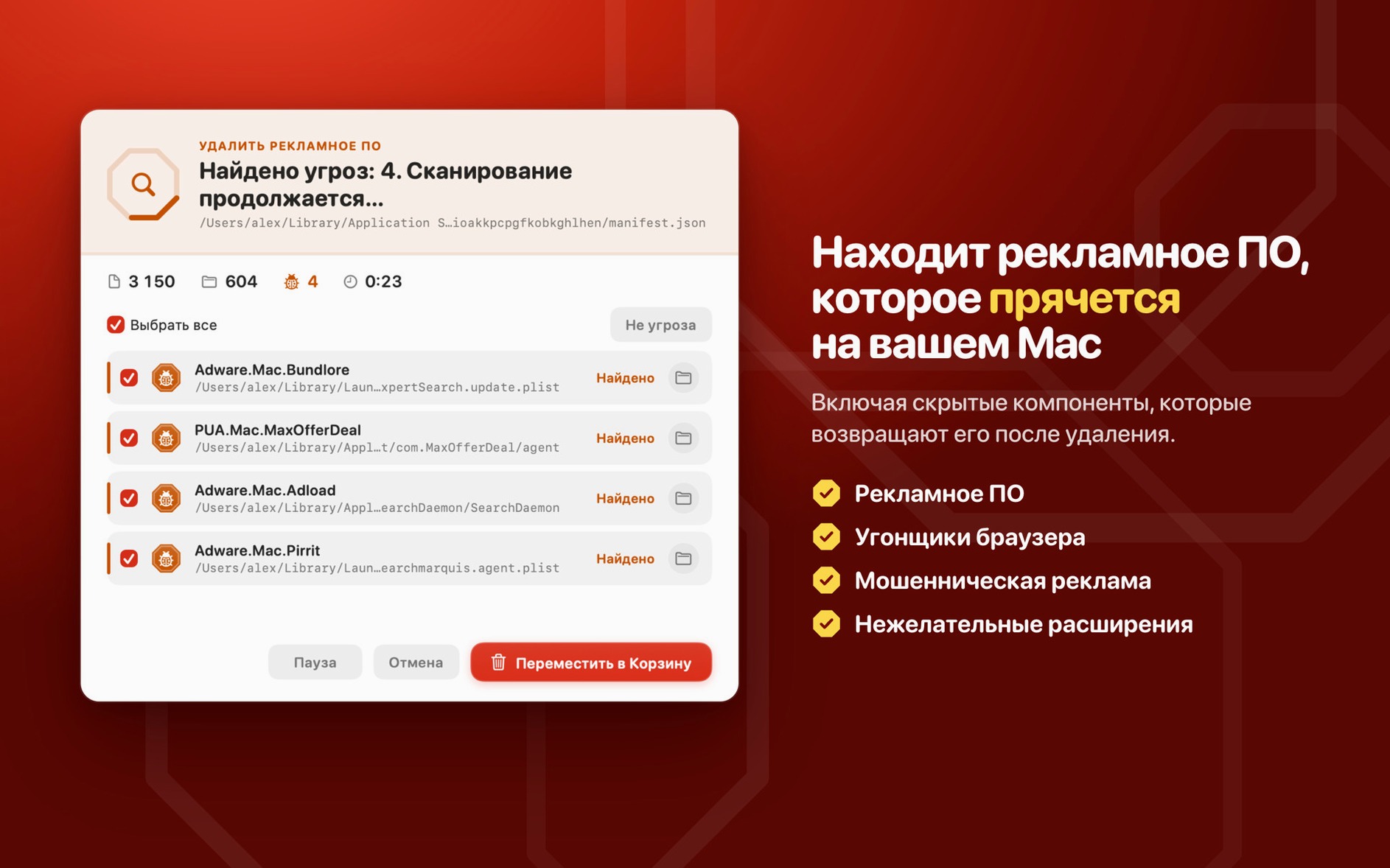
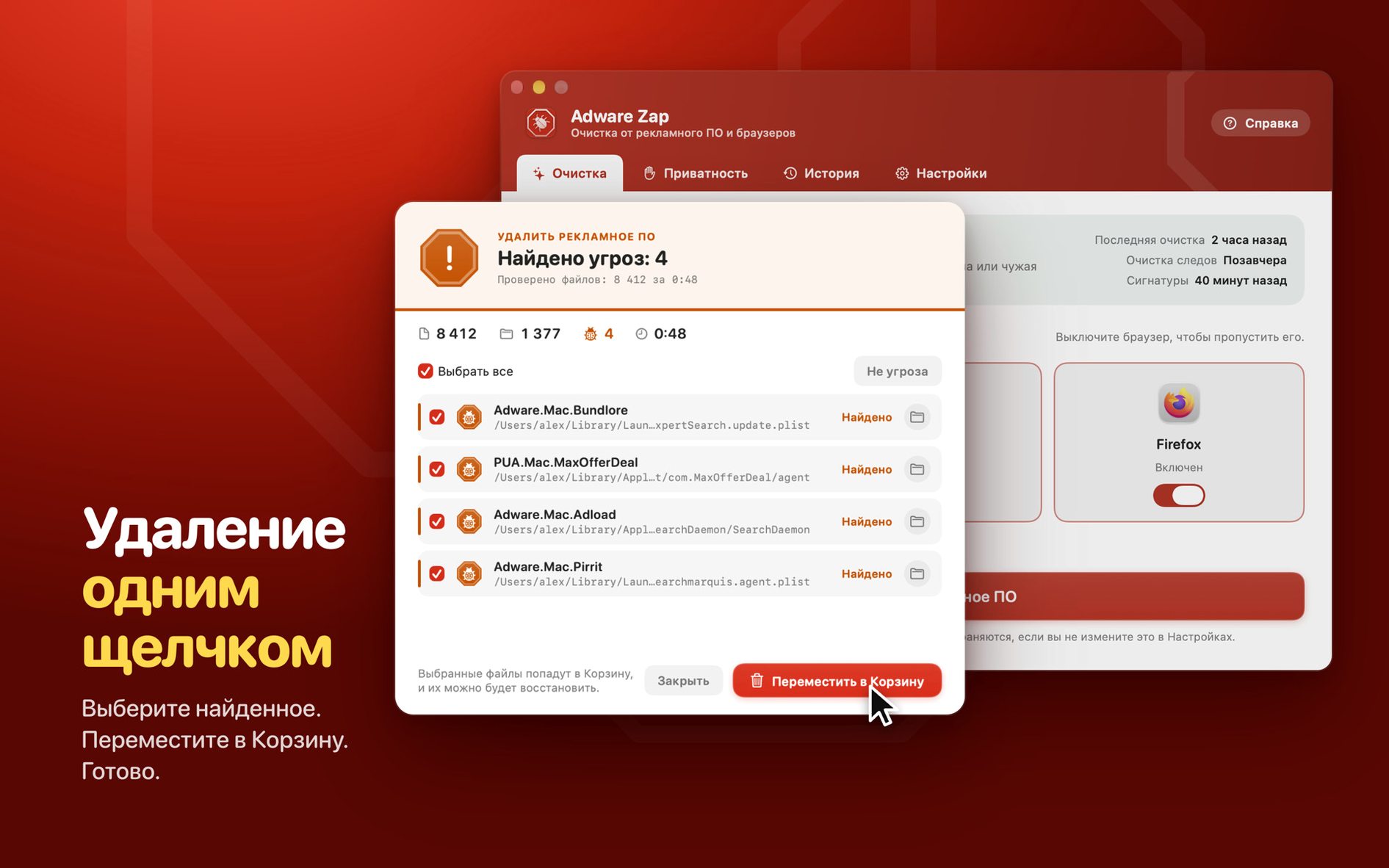
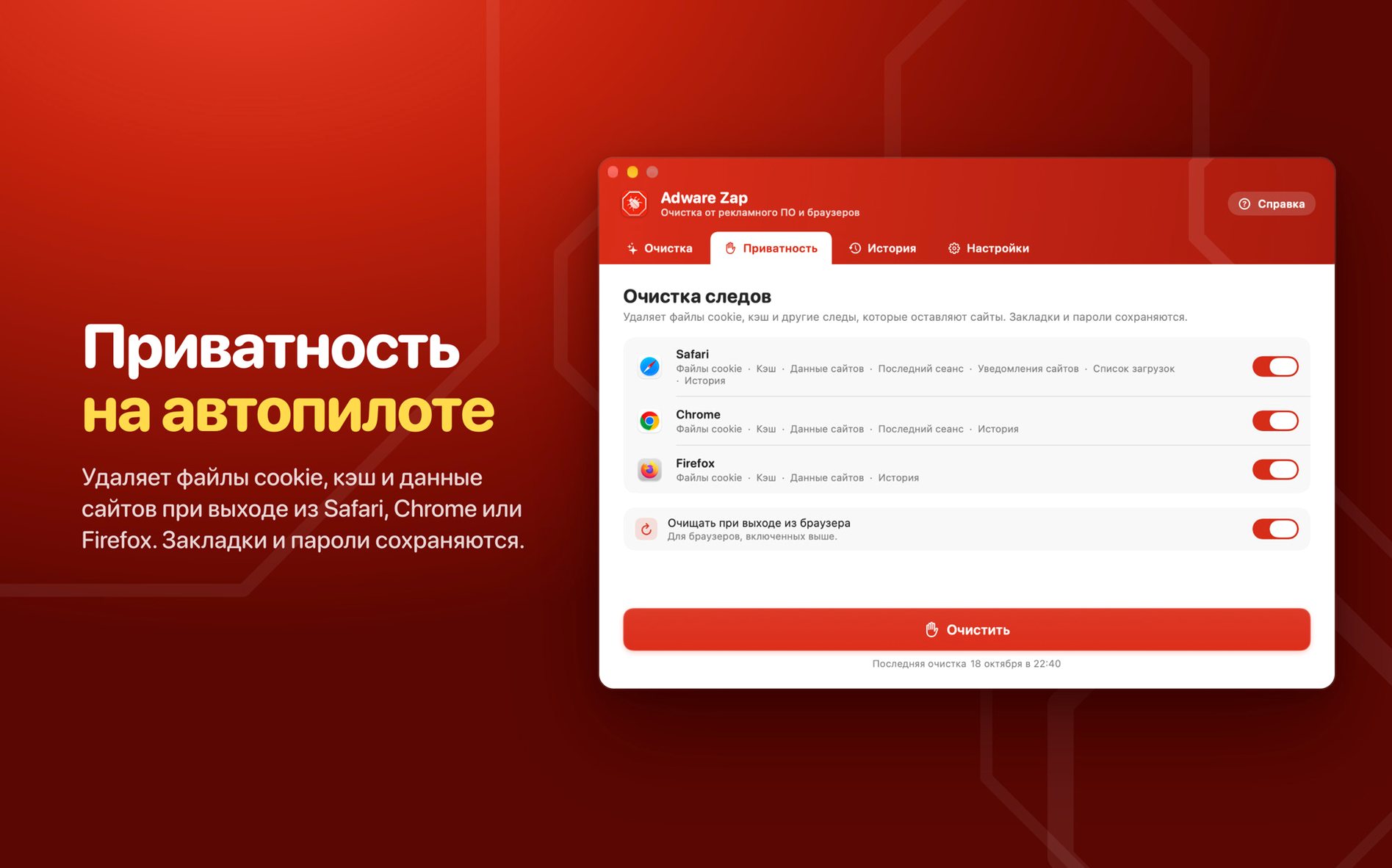

The Browser Cleanup utility inside Adware Zap 2.13.0 does exactly what its name suggests: it scrubs the junk adware leaves behind in Safari, Chrome and Firefox. After a redirect chain or a pop-up storm, this tool removes the cookies, cache and unwanted extensions that keep the infection alive. The developer says signature updates download automatically, so the detection stays current without you thinking about it.
| Detail | Value |
|---|---|
| Version | 2.13.0 |
| Developer | Voros Innovation |
| macOS requirement | macOS 12 or later (Intel and Apple Silicon) |
| Languages | 18, including English, German, French, Japanese and Chinese |
Sits next to whatever you already run for daily maintenance — it’s specialised, not a system-wide scanner. If a browser behaves oddly or a homepage keeps changing, this is the tool to reach for before you reset everything manually.
Adware Zap and existing antivirus
One thing that comes up often is whether Adware Zap conflicts with antivirus software you already have. It doesn’t. This utility focuses on browser-level cleanup — adware, unwanted extensions, redirects — while a proper antivirus handles system-wide threats. They work side by side, not on top of each other.
Another common question: does it scan email or documents? No. The scan targets browsers and the places adware hides inside them. If you need a full malware scanner, this isn’t that. It’s a targeted tool for a specific problem.
People also ask if the scan slows the Mac down. It runs locally on your machine, and signature updates download in the background. The scan itself is quick because it only checks browser-related locations, not every file on the disk.
Working with network-level blockers
Adware Zap works well alongside tools like Little Snitch or a Pi-hole if you already use them for network-level blocking. The utility handles what’s already on the machine; network tools stop new stuff from reaching it.
The developer includes a workaround — pressing Enter in Terminal after mounting the disk image — to authorise it. Once you’ve done that, the app opens normally from Applications. You only need to do this once.
If you keep Time Machine backups, run Adware Zap before you restore a browser from a backup. Otherwise you risk bringing back the same adware you just removed.
Stopping synced extensions from returning
Some users find that after a scan, a browser extension reappears. That usually means the extension is synced through iCloud or a browser account. You need to remove it from the browser’s sync settings too, or the extension comes back on the next sync.
Another snag: the app doesn’t open after dragging it to Applications. This is almost always Gatekeeper. Run the Terminal command from the disk image again — the one that bypasses Gatekeeper — and it should start. If you’ve already ejected the disk image, mount it again and follow the same step.
Occasionally a scan finishes but the browser still redirects. That can happen if the adware changed system-level proxy settings. Check System Settings > Network > Proxies to see if anything unusual is enabled, and turn it off. After that, run Adware Zap again to clean the browser once more.
- macOS 12 or later
- Intel or Apple Silicon
Kit check at a glance
| System | macOS 12 or later |
| Chip | Apple Silicon, Intel 64-bit |
| Download | 25 MB |







Chat from the booth
Sign in or grab a free account to leave a comment.
Nobody has said a word in the booth yet. If you played a set with this build, tell the next person how it went.